
Do you ever find yourself asking, "Is this really how I want to keep living?"
I think it's one of the biggest questions many women eventually ask themselves in midlife.
Not because everything has fallen apart, but because somewhere along the way we've become so busy being who everyone else needs us to be that we've lost touch with who we are.
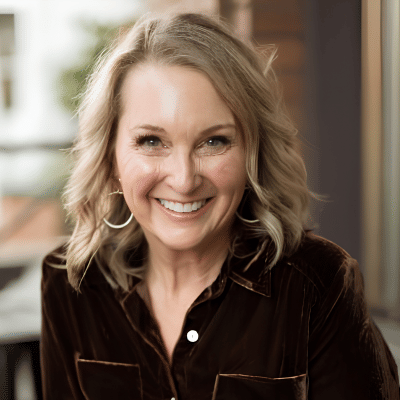
That was one of the things I loved most about my conversation with Sandra Wood.
Sandra's wake-up call came with a breast cancer diagnosis at just 40 years old. Like so many significant moments in life, it forced her to stop and take an honest look at the life she'd created. Not from a place of regret, but from a place of curiosity.
Who am I without all the roles I've been playing?
It's a question many of us don't ask until life asks it for us.
Our conversation explores what happens when you begin questioning the identities you've carried for years; wife, mum, employee, carer, the dependable one, the woman who always says yes.
For many of us, those roles become so familiar that we mistake them for who we are.
One of the biggest themes we explored was over-functioning.
So many capable women build their self-worth around being reliable, productive and endlessly available. We become the person everyone depends on, and before we know it, we're carrying far more than was ever ours to carry.
At work, it might mean saying yes to every opportunity because you know you can do it.
At home, it can look like managing everyone else's emotions before they've even had a chance to manage them themselves.
Eventually, it's exhausting.
One of my favourite moments in the conversation was when Sandra shared a simple piece of advice for women who constantly strive for perfection:
Try doing a C-grade job.
I laughed when she said it because, for so many of us, that feels almost impossible.
But underneath the humour is a powerful truth. Sometimes doing less isn't lowering your standards. It's choosing your wellbeing over proving your worth.
We also spent time talking about boundaries.
Not the kind that push people away, but the kind that allow you to stay connected to yourself.
Sandra makes an important distinction between internal boundaries—knowing your values and listening when something doesn't feel right—and external boundaries, which are about communicating clearly without feeling the need to justify every decision.
One sentence from our conversation has stayed with me ever since.
"I have no business with that."
It's such a simple reminder that not every problem is ours to solve. Not every emotion is ours to carry. And not everyone else's disappointment is ours to fix.
We also explored Human Design as a tool for understanding ourselves more deeply. Rather than putting ourselves into another box, Sandra sees it as a way of recognising that we all have different ways of using our energy, making decisions and avoiding burnout. Sometimes the greatest shift isn't changing your whole life. It's changing how you move through it.
What I loved most about this conversation is that it offers hope.
Midlife doesn't have to be the point where life starts shrinking.
It can be the moment we finally stop performing and start living.
And perhaps that's what finding yourself again really is. Not becoming someone different, but remembering the person you were before everyone else's expectations took centre stage.