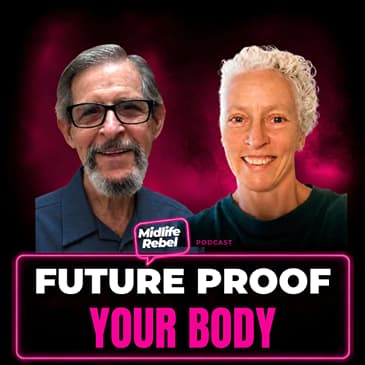
What do we expect life to look like when we’re 85?
Michael Dorfman is living proof that we might need to think again. With a daily routine that includes meditation, breathwork, crawling drills, walking, pickleball and regular resistance training, Michael is approaching 85 with strength, curiosity and a commitment to his wellbeing.
In this episode, we talk about healthy ageing, longevity and the everyday habits that help us maintain strength, mobility and independence as we get older. Michael shares his approach to intermittent fasting, sleep, exercise and plant-based nutrition, including the importance of whole foods, getting enough protein as we age, and the connection between fibre, the gut microbiome and inflammation.
But this conversation goes beyond diet and exercise.
Michael describes what he calls the “fifth stage” of life and his seven pillars of longevity wellness, which include resilience, circadian alignment, regenerative capacity, mindset and purposeful contribution. We also explore what we can learn from the Blue Zones and how the way we think about ageing can influence the way we experience it.
For those of us in midlife, Michael offers a fascinating glimpse of what the decades ahead could look like — and perhaps a reason to question some of the assumptions we’ve inherited about growing older.
Visit our website to find out more about this week's guest.
All of our guests, including this one, are included in our Guest Directory so that you can find out more about them and the work that they do.
https://midliferebelpodcast.com/guest-directory
If you'd like to support the show you can buy me a coffee!
https://buymeacoffee.com/midliferebelpodcast
Challenging The Ageing Story
SPEAKER_04So I thought that, okay, well, I was 60 years old, and I'm thinking, well, I have another good 15 years left. So that's okay. And then I got to 70, and I got, well, I got enough for five, maybe 10 years left. But then and in my 70s, I was starting to feel healthy because of the way I was living my life. And then I got closer to 80, and it was like, maybe it, maybe it's going to be different for me than it is for most people. Because most people, when they're in their 80s, are surviving. Or they're on their meds and they're and they're told that they're managing their disease, managing the symptoms of their disease. And maybe it could be different for me. So I got into my 80s and it was different for me. And I wrote two books while I wrote my my and two years ago, my my second book, and this year my third, you know, my third book. And that's what I'm doing. And I'm saying I'm trying to prove everything we're being told about this fifth stage of life is wrong.
Daily Routine For Thriving 80s
SPEAKER_00Would you start us off? I've been really looking forward to this conversation. This is all stuff that I'm really interested in. Um, would you would you kick us off by telling us what a normal day looks like for you?
SPEAKER_03Okay. Now yeah, go for it.
SPEAKER_04Okay, so uh a normal day, which is probably about 80% of my days. Yeah, uh, I I uh get up around six o'clock in the morning and uh I do meditation. Yep. And then I follow my meditation with uh breath holds. So uh to get you know get the energy up there because we're already into like the cortisol and uh ready to move for the day. So that's what I do. And following that, I don't know if yeah, I do crawling. What is it, calling? I don't know if you heard of crawling. Crawling, crawling, like the baby crawls on the okay. Okay, but this is a crawling, it's like it's a latest thing, not that many people uh know about it, but uh it's based on uh the fact that you know human beings are the only animals that are always upright so we sit down. But other animals are moving on crawling. We have the bear crawl, we have the cat crawl, we have the alligator crawl, we have the crab crawl. So uh the whole idea is to get the uh the gravity, you know, gravity just pulling down on us throughout whole life. You know, that's why we have end up one of the main reasons people end up with back problems you later on in life, bending over. It's just this constant thing with gravity. So crawling is very hard, especially when you start it. It's really something it looks easy, but when you start doing it, you haven't done it all your life. So I started crawling around and I'm getting better and better. Uh, so that's what I do. And then uh usually about four times a week, I go play pickleball. Yeah, I'm a pickleball fan, I'm an addict, actually. So uh I do that, or else if I'm not doing that, I'll start off. Uh I'll do the uh I will do some walking, uh, maybe for about 45 minutes, which I did this morning. And then uh pickleball, come back. We already have like uh a 14-hour window for the intermittent fasting, and uh then I eat, have breakfast, and try to get you know a bunch of a lot of protein in there through it's I'm plant-based. So it's been interesting because I've been trying to uptake my protein through plants, uh the ones that are strong in protein. So I do that, and then uh and then I'll get uh busy with my day, either work on my book. Um I'm translating the book now into Spanish, work on the book, and uh and then and also do you know, preparing for podcasts, looking for more podcasts, writing my articles for have a Substack. Uh so I write articles. I just put out my latest article on uh on uh Alzheimer's yesterday, really a good one. So I did that, and then uh do some shopping. I have my wife, my wife is uh actually she's uh Thursday, she's having her 81st birthday. I'm gonna be 85 in January, so we're going somewhere. Uh but that's uh pretty much the day, meeting with friends, uh and uh keeping busy and yeah, I think that's it. And there's the day uh having lunch at around in Mexico. The lunch is the strongest meal of the day, uh, to between two and four in the afternoon, which I we just got finished eating. Uh so my wife is a great plant-based cook. So we had some uh great food, and uh yeah, maybe I'll go. Oh, I also belong to the gym. So I go about three times a week to the gym to get some weights done, recombination protein, and then uh resistance training. So I'm in living this life of just being this person who is thriving during the 80s and hoping to get as far as I
Sleep Screens And Staying Active
SPEAKER_04can. Brilliant. And this is what I want to share with people, and it's really possible, even though the mainstream is telling us that once you're in your 80s, there's not much there, you know.
SPEAKER_00Absolutely. That's exactly um why I asked you what you do each day, because if you asked probably most people how they picture an 84-year-old, and it might be a grandparent, it might be someone they actually know, what would they do in their day? And the picture that probably most of the time would be conjured up as they get up, you know, they have a cup of tea, they sit down in their armchair, they might turn on the news, they sit all day, and they um maybe, you know, this is a bit harsh, but they're in God's waiting room, you know, they're not living a life quite like you. And I absolutely love that you're doing this. I'm 52, and I'm really I follow a lot of the same practices that you do, not all, but um, a lot of the same practices because I'm a real fan of longevity and I want to get as far as I can as well. But you've got that lived wisdom, and you are actually there almost 85 doing all of the things. I just think it's brilliant.
SPEAKER_04Yeah, well, to end the finish my day. So it gets towards the end of the day, and I'm starting, I want to wind down. So uh, and it's so attractive to be on the screens all the time, you know, and uh watch TV. So I just uh have my latest meal. Well, I I I try to finish eating maybe 7:30, 8 o'clock at night, and then I won't eat until 10 o'clock, the 10 uh 10 a.m. in the next the next morning. So then I'll wind down and uh I'll do maybe a couple breath work, yeah. Uh to get you know, to slow down and get uh uh yeah, into uh in in so that the melatonin starts working and you start so you know winding down for the evening to be able to get a good night's sleep, which you know is really interesting because you know, for older people, uh one of the main problems they have is there's having uh uninterrupted sleep, you know, whether they have to get up to go to the bathroom or for any other reason. So it's really important, uh, and that's what I put into practice because I know I want to I want to function on all cylinders. And uh the only way of doing that is really staying active. You know, people who reach 65 here in the West, I don't know how it is in Australia, you know, you retire. Yeah, and uh and if you don't have anything else to continue with, you just fall into your comfort zone. And it's easy to do that, you know, especially when all the all the uh technology is saying, oh, you don't have to work that hard, you know, and just uh you've been looking forward to retirement just to sit around, not do that much. So uh yeah, I'm against all that. And I think the only way you can really thrive as you get older is uh is really being active instead of like you know, the opposite of what they tell you to do. Don't work anymore, don't, you know, uh push yourself, don't uh challenge yourself. So that's where we're going, it's going against the grain of what the the doctors and what the medical profession and what the uh what the you know the song the media is telling us.
SPEAKER_00Yes. And it it starts pretty early on, right? So as I said, I'm early 50s, and um I've talked about this with a lot of my uh guests about how that we are influenced, you know, there's an expectation that we're uh to start winding down, even at my age, you know, and when women go through menopause, you know, it's game over. Like life's uh you've you've lived your prime, but um I'm living proof that that's not true, but you're living proof that that's really not true.
From Vegetarian To Whole Food Plant-Based
SPEAKER_00When did you start this journey? Has it been a long journey? Is it something that you decided to do when you were in your 50s or even before that? Have you always gone like I'm gonna I'm gonna go for it? Or is it something that's kind of developed over time?
SPEAKER_04Well, I think I, you know, my my first change was in 1976, uh, that I became a vegetarian, but it really wasn't so much for uh health reasons. I was it became interested in Eastern philosophy and religion at that time. And people on that side of the world were a lot of them were vegetarians, so I went along with that, and I continued with that, but I was getting sick a couple times a year, not terribly ill, maybe flu like flu-like symptoms, sore throat, congestion, headaches, fever. And it was happening every year, but uh I just continued. And my brother, uh, he's still he's in his 90s now, and he's been plant-based for I think about 40 years, but he was plant-based at that time, and he told me about maybe it'd be a good idea to give uh give up dairy. So I didn't want to do that. It was very difficult difficult for me because of the pizza and the and the cheese, which I love. You know, for many people, you know, even giving up dairy is even harder than giving up uh meat. So I didn't do that for years. And then finally, I read the book by T. Colin Campbell, The China Study, and he was a biologist from Cornell University. His book, The China Study, sold millions of copies, considered maybe the top uh epigeneric uh study ever done uh nutrition, because he was uh uh contracted by China to go across with his team and find and map out the cancer in China because Chao and Lai had died a few years before, and he wanted this done because of the rising cases of China, especially in the big cities. So he they did uh the the study was done over a 20-year period uh in over 160 uh communities in China, rural communities, and one of the main things was the plant base was uh was a basic, maybe not 100%, but that was the basic. So that uh, you know, I decided after that uh to make the change, but it was another thing that Campbell had done because he wasn't a medical doctor, he he was a uh biochemist, and he was doing studies on rats on uh on uh protein, casein protein in in uh milk uh on rats. And he was able when it reached uh I think it was over 20% of the calories were in uh casein uh protein, uh 100% got tumors, cancerous tumors of the rats, and then we reduced below 5%, none of them got tumors. So that was another thing when he did that. So he didn't uh uh that those type of studies on uh animal protein. So I gave up protein and I gave up, well, I gave up, I didn't give up protein, I gave up uh uh uh I gave up dairy, and that was it, and that was 18 years ago. But I think uh what I'm getting at was the big change for me when I decided I was gonna help other people and share
Heart Disease Reversal And Medical Blind Spots
SPEAKER_04the message was that a friend of ours, uh, who we were living in Cancun, Mexico at that time, and a friend uh was living in Cosemel, she was a Mexican, and uh she had a heart attack. So they uh they she went to the hospital, had a quadruple bypass, heart surgery, uh survived that, and then went home, and for about a year she was doing okay, but then she started having pain in her arm. Uh, and they called her back into the hospital, and they wanted to put a stent in, which is fair is normal uh for people who go through the the surgery. Why? Because the initial uh cause of the of the clogged artery has not been has not been removed. You continue eating the same, you know, the standard American diet, as we call uh call it over here. So they wanted to put a stent in and they couldn't because the vein that replaced the original artery was too uh narrow. So they couldn't do it. They told her that uh they couldn't do anything. They sent her home, they gave her meds, you know, pharmaceuticals to take, told her not to do too much exercise, climb too many stairs. So she went home, but that what they didn't tell her, and they told my wife and her son, was that she had about six months to live. That's how bad it was clogged up. So I was here, I didn't go, but I was in Cancun, and I already, I was, it was 16 years ago, I was I had already been reading on doctors and health specialists who were who were who were reversing heart disease through uh plant-based nutrition. And the one, the most popular one was uh Coldwell, Dr. Caldwell Esselstein, who was the chief of staff of Cleveland Clinic, uh and also one of the top surgeons there. And he was uh he would every year he was always he was talking in his book, which is I have here the book that he wrote, how to uh uh prevent and reverse heart disease. So uh he was every year, he was always confused. How can it be possible with all the technology that we have, the training of our doctors, that it gets worse every year, every year cardiovascular diseases? And this is not only in the US, but all over the world, and it still is that way. And so he what he did, he he started, he wanted to try something else, and he was getting uh uh patients that were very far advanced in heart disease, cardiovascular disease, and he was putting them on the strict uh plant-based diet, and he was having uh up until uh what he's in his 90s now, up until he stopped doing this, uh, he was having a 95% uh uh success rate in reversing heart disease. So people instead of living weeks and months, they were living 10 to 15 years longer, long. And uh so what I did is I I gave the book, uh I had read it, I gave the book to Beatrice, and uh she read it, and she did I she didn't know, she still didn't know that uh they gave her six months to live, and she went on the plant-based diet, not even 100%. I would say about 85%. And instead of living six months, she lived almost 10 years. Wow. So and the doctors were amazed, you know, they couldn't understand it. But that's the way it was. And to me, it was like a big change impact on my life. How is it possible that it continues to this day where where even if you go through the the uh the surgery that you don't get this option of plant-based, you know, food, you know, eating more than you're not educated about it. And it's because of exactly that. Doctors aren't educated, and still it's a struggle to get it through because of the uh pharmaceutical industry, the power of the pharmaceutical industry. So I made the change, and uh I found out there are other diseases that can be either slowed down, prevented, or reversed through plant-based nutrition, increasing the amount of uh plants you eat and you know, and uh you eat in your diet. So that was the big change, and that uh that was the second big change. I don't know if you want me to stop here for a moment.
SPEAKER_00I would love to ask you some questions about that particular your your your diet in particular, um
Plant-Based Eating Without Processed Junk
SPEAKER_00because uh you have to be very conscious if you're eating a plant-based diet that you're getting enough of the right nutrients and the quality of food in. I feel like there's a there's a wave of um well, it's become an industry, right? Veganism is an industry. So there's food that's made that's sold as vegan, but it's not necessarily healthy. Healthy, and this is a big challenge, whether you're a meat eater, whether a vegetarian, whether you're a vegan, getting enough good quality food and nutrients into your diet for them to benefit your health. So I'd love to know what your daily intake looks like. How do you get that, you know, a good um amount of quality food? Because we're not always guaranteed, are we, that the food that we're buying, like you might buy vegetables, but they they tell us now that in fact the the nutrient value of food that we buy from the supermarket, veget even fresh vegetables, is you'd probably need to eat like I don't know, five times as much as you would have 20, 30 years ago because of the way that it's produced.
SPEAKER_04Yeah, uh so I like to just start off and say that uh not all vegans are created equal. An article on that I wrote a long time ago. Uh, because most vegans are not vegans for their health, they're vegans because the interest in uh protection of animals, ethical reasons. So I know that because uh I created here in San Miguel de Allende, where I live, uh the vegan wave uh it's a Facebook group. We start out with 30 members, we have almost a thousand now. And uh I the great majority, maybe 90 percent, 85, 90 percent, are there because of the animals. And the pri the thing is, okay, uh that means that you're vegan, you don't eat anything or even use anything that comes from an animal, but it's not for health reasons. And I know that they eat, they don't a great majority of them don't even eat that healthy because you can you can you know you can eat fried potatoes, you can eat cakes, you can eat package all kinds, you know, uh refined rice and refined foods and not get the nutrition like you're you're mentioning. So I think I wanted to make that uh you know, say that. Yeah, you know, so I think when people start, oh I know vegans are not that okay, but exactly what what are they eating? What's their motive as well? Yeah, what their motive, and the problem we have is we have the confusion of so much information out there. Yeah, it's unbelievable, you know, and because it's money behind all these industries, you know, that you know, like you can mention about the uh you know, the plant-based uh plant-based meats, plant-based dairy, the cheeses, you know, and you look at the ingredients. Why? Because everybody wants them to taste like the original. Yes. So, okay, how do you get uh soy to taste like meat? You gotta do a lot of things to it. Yes, you do. You have to use the textured soy, which is really not you know healthy at all, then that's what they use. And then you have the plant-based uh, you know, milks. And and it's really interesting because I came across this uh, I was drinking, you know, there's so many plant based options, milks. And they they look, you know, they look white, they're white and they're they have a lot of body to them and everything. And then it's like, okay, that's it. Well, that's incredible. And I just found out that it ain't they're not that good because they have all the stuff added to. them. So now we started making our own uh soy milk and it doesn't it's different than the stuff you buy in in the store, you know, which is uh whether it's uh soy milk, whether it's uh uh almond milk, whether all of those milk, they have to they want to look like milk and they want to have the body of the milk, which doesn't happen. So we started making the soy milk uh the way, you know, from just soybeans with a machine we have of soybeans, and it ends up it's not as thick as the the soy milk you buy in the store. And it's like, oh my God, it's like that's bad news. Because I, you know, and it doesn't it's yeah but that's what you learn you know as long as you keep doing the research you'll find out of course the money is behind it and you find out that they don't you know almond milk you buy in the store has like two percent almonds in there. Yeah right it's got vegetable vegetable oils emulsifiers emulsify yeah yeah so this is what they do so this is what you we're fighting against you know this is our challenge and exactly what you're saying so uh I have uh you know there are different schools or of what you know how to eat plant-based foods and I I really um I really follow T. Colin Campbell the one who wrote the China study I also got my I have certified plant-based nutrition through his group and uh so I don't uh I don't get into the numbers so much you know the I just uh do you mean like the quantities of each food the quantity yeah I know I know which foods are good for protein for you know the types of the uh nutrition the most important thing for me is variety yes is variety getting all different colors because the antioxidants and the polyphenols they're all each each plant each group each fruit each vegetable carries different nutrition so uh you know you try to put in as many different types of uh of plant foods whether it's fruits vegetables nuts uh grains uh seeds uh whole trying to get make making as whole food as possible you know the least uh refined the least processed because one of the great problems we have now is ultra processed foods yeah you know and in here in the West 70 75% of the food that people are eating on the Western on the standard American diet are processed ultra processed so there you're starting off with you don't get really whole foods so anyway so that's what I do so I I don't focus on the numbers I get variety and I just do this and this is what I'm doing for 18 years I don't take I used to take a lot of uh uh supplements vitamin mineral supplements that was uh uh the first five years I became uh plant-based I was taking supplements because I believed in it I gave that up like about uh uh 12 13 years ago I don't I take uh you know maybe I take uh a B12 which is supposedly very very important for people on a plant based and I think even people in general B12 uh I tried I used to take I was taking vitamin D but here's a lot of sun so I'm I said no I want to get the my vitamin D from the sun and I take other natural uh supplements whether it's uh amla powder from the uh Indian gooseberry uh I do uh all cucuma uh well turmeric uh different spices I include lots of spices in in what I eat hemp seeds for the protein so now I got into protein yeah so now I have to you know what am I going to use for the protein so we just had our lunch so here it was uh we made uh a vegetable dish and then we put the uh quinoa you know in it uh with beans black beans and I make my salad I put my the hemp in the salad uh with some seeds whether it's uh sunflower seeds uh squaw seeds uh what else and I have uh tofu not well I had the the it's a it's a soft tofu which I make into a cream I I use this for mayonnaise oh yeah it's uh so I use I put that together with the when I make uh uh what do you call it uh potato salad yep so I'll use that instead of you know mayonnaise the regular mayonnaise so that's what I'm doing I'm just uh creating new things I make my own chocolate uh uh I make my own granola uh I make now make the mayonnaise and I make different things I make cream trees incredible cream cheese out of tofu I couldn't believe it tofu is amazing because it doesn't have much of a taste so you can make it adapt to uh other things so this is what I do and then you know so that's the lunch and we'll have I told you I said that my wife's a great uh uh uh plant-based cook so uh you know that's what we do and then we'll have soups whether it's uh uh what do you call it uh the uh soy soups made out of uh quinoa made out of lentil soups yeah uh chickpea soup uh ava uh flava beans food soup I love soups uh so uh you know and then we take soybeans and we'll toast them and put them into the salad because now I want to get more protein because it seems that the level of protein uh that we need uh and we get older is grows.
SPEAKER_00Yes.
SPEAKER_04So it's gone from because I used to I was I I wrote this book in my first book I wrote was in 2019 The Thriving Vegan. Okay and then I did my second book which was 2014 which was on another subject it was on geopolitics and also there was the manipulation of information everywhere. So I'm really into that that's why I do a lot of research and I never give up on the research because I know that's all being manipulated. So uh anyway so and at night we will have some leftovers or maybe I'll have a fruit salad and uh with granola and uh this is what I do but I don't really focus on because I know that everybody has their trip going everybody has their different idea of what it takes and we can get so confused with it. So here I am I'm saying I'm I'm the living I'm a living uh example example example of
Protein And Strength After 60
SPEAKER_04somebody who's doing what people are talking about because you know what's most popular now longevity is so popular but I hear people tell me that you should go listen to one of these summits on longevity you get some good ideas so I I look at the list of the of the experts and I think the last one there was only one over 70. So I'm saying there's like they don't have anybody who's actually living it's living it. Yeah so I'm saying no I'm not gonna do that you know I'm just gonna you know I'll have my next book launch coming up on the in in a week from Thursday and I'm gonna talk about what's working for me and now my toolbox what I can talk about to people you want to do something you want to really start you know enjoying your life and know that it's really really possible to thrive during the 80s and 90s and to be healthy so uh it's the possibility is there you don't have to listen to what they're telling you.
SPEAKER_00Exactly um I would love to delve in a bit more about protein so I have had I I've got a niece who's early 30s she was um a vegan for quite for most of her adult life but then she had children and she found that she needed to add protein like um animal protein to her diet basically for breastfeeding and then we've got women um who are going through menstrual cycles which that can be a I know someone I definitely know someone who's um in my friend group who's who was vegetarian and she found that her iron was low and then we've got women older women who are going through menopause and you mentioned um just for adults in general as we age it's difficult to maintain it's more difficult to maintain muscle mass and so we need that protein to maintain it. How how much do you think your particular practices are more geared towards people of your age and even men compared to you know women I guess of reproduction age that might experience different things.
SPEAKER_04Yeah well it's interesting because I'm being I'm going through this now you know with the with the protein because uh I used to when I I I played high school football I was I I used to be into animal food my father was a butcher my brother was a butcher when when I grew up so uh here I am uh and I want to uh I decided because I was uh around 132 133 pounds as I am I'm only 5'7 though so but I wanted to put on protein I wanted to add more protein and I know that because I've been reading a lot more on on losing muscle mass yeah so the amount that uh is supposed to be or was when I wrote my first book on veganism was you're supposed to multiply 0.8 by your kilos uh what you weigh and that is the amount of grams you're supposed to get and now it's changed now this instead of 0.8 you're supposed to 50% more 1.2 to 1.5 times your kilos so for me that's like uh oh that's like a lot more a lot of protein yeah instead of the 45 grams of proteins now I'm supposed to get 70 grams of protein so that's what I'm doing uh and I that's what I've done in my life so uh so I'm I'm experiencing uh uh my muscles are getting stronger I feel because I'm also going to the gym so really it's a combination it's not only the pre you won't get muscle mass just by eating proteins you need to do the exercise yeah you need to do the resistance exercise you need to be active and uh if you don't do that it's it's not gonna work so uh and if you do the a you need the the protein in order to make it function doing the exercises you know when you get I don't know much about you know how it is with uh you know with the menopause and people are are uh pregnant women are pregnant but I wanted to bring up so I don't know what the you know how to deal with that yes yeah uh I know that I have my daughter-in-law is going through menopause now she's mostly uh she's not a hundred percent vegan but she's dealing with that uh through uh uh mostly eating plant-based but uh not completely so I wanted to bring up something else because I changed I've changed my uh ever since I wrote my first book uh because I see myself as it's all I'm evolving you know new information is coming out new studies are coming out so when I wrote my first book in 2019 I was 100% vegan it was like you had to be like that you know that was that was the basis of the book and then and now uh I'm seeing that it's yeah I I started changing and as soon as I I started getting into whole study of the microbiome uh through I don't know if you heard of Dr. Will Dr. Will Bolshevich he's a gastroenterologist uh he uh so I
Microbiome Fibre And Blue Zone Living
SPEAKER_04I listened to him about this because he's uh into the microbiome and I started getting into the microbiome and then I what do I find out that the microbiome is is the source of so many diseases the our gut bacteria uh we need to feed our with it we need to feed ourselves because we love to eat and we're supposed to eat healthy but we need to feed the feed our the gut microbiome because they have their own lives right there they reproduce they they do all kinds of things each there our gut bacteria and then you find out that there are more uh micro our microbiome there's more cell microbiome cells than we even have human cells in the body there's over 36 trillion uh uh microbes in our in our gut so uh we have to take care of these the bacteria why because they are they create they they uh ferment the the fiber fiber is the favorite food of the microbiome uh and when you learn that you learn well you also know that fiber is only found in plants yeah so that's that's a no-brainer and that that's the way it works so okay because even you know because I got into the blue zones and they're not a hundred percent uh plant based like 85 90 and in in Okinawa they eat uh you know the fish and in uh in uh even in uh what do you call Loma Linda California the uh blue another blue zone in the US they eat they also eat fish they're pescatarians and then uh they eat meat in in Nicaria in Greece where they drink milk uh goat's milk so it's okay you know that's what they do and they're doing that for hundreds of years and they live 10-15 years longer than than uh we do in the West but they also have their lifestyle so I got it became got into my lifestyle and part of it also is we're learning learning about stress and the need to deal with stress because stress is so intense at this time in history and I think it all started with the you know the pandemic when we really got into stress we started hating each other because you believed this you got vaccinated I didn't get vaccinated you why are you wearing a mask you're not and then you a separating family everybody goes into lockdown I mean that's like set stress off the charts and this is the way it's happening now with different problems you know people are suffering because they don't have jobs they're every is the future is uncertain you know now and the war is going on so I started getting to this well what can we do about that what kind of lifestyle I need to avoid the stress so uh so what I'm trying to say basically is you know uh it's important you need to get the fiber so if you want to eat you know eat animal foods okay uh but you have to get enough in the West in the West in the standard American diet 95% of the people don't get enough fiber and uh for men I think it's uh 38 grams a day for women 25 and they're getting both getting about 15 15 grams so we have to get back to that and uh because that's where you know uh chronic inflammation starts if we don't get our gut microbiome healthy and producing the short chain fatty uh fatty acids the butyrate the acetate which uh heals our gut which which uh helps our immune system strengthen we need to give them the fiber so i'm more into plant based even though i'm 100 and my wife is a hundred percent uh plant based well she's about 95 i'm a hundred percent uh but you don't have to be like i mentioned uh beatrice she was about 85 and she lived uh 10 10 years instead of uh you know the six months so i've sort of gotten low uh you know i've calmed down on that and that's what i have in my new book which is the uh the longevity wellness revolution it's a combination of of nutrition plant-based nutrition and uh which i've learned from the blue zones and also which i've picked up from the latest things that are you know and i try them out i try out different things which works for me and it's amazing what i could do i can't believe i'm i'm crawling like i'm crawling i'm doing 25 pushups a day and i just started doing it three uh weeks ago uh it's and i do hanging it was very important so for my posture ultimately it's about having agency isn't it and and like using yourself as a bit of an experiment and not being too rigid like for example I might decide that I'm going to try a plant-based diet and so because I'm a meat eater and I cut back on my meat but then I notice that my energy levels change for good or bad and so I adjust accordingly and I also look at what other things are happening you know is my sleep okay is my stress are my stress levels high and it's about becoming more aware and making conscious decisions and not necessarily just going oh well Michael said that I need to go 100% plant based and that's what I'm gonna do forever. It's about becoming more aware of of how our body's responding isn't it to all the different things yeah and it's paying attention to your body yes that's the that's the other you know it's like to your own body like I'm paying attention to my body but you know even though there are basics basically the same we are different and we have to know you know what so that's very important and uh unfortunately we're we're not people aren't the we're we're listening too much to the medical profession what we're being told from the industries you know that uh we're losing we're not in touch with our own bodies and we're not in touch with our own needs. Yeah so that's very important because our body's been taking care of us since we were born and if we give up our body's ability to heal itself and to take care of us and become uh dependent on drugs and and what you know the different type of uh uh what doctors you know use for treating diseases and everything and it's basically symptoms that they take care of we're gonna lose touch with ourselves and uh and the more dependent we become on on pharmaceuticals uh the more we're gonna have to you know take pharmaceuticals to get rid of the original disease then take care of the side effects by taking up the more uh different pharmaceuticals and uh we get less and less we become less and less connected to our own bodies yeah and that's not gonna help us live a longer life no it's not but there's not it's not just diet and you've you've told us that stress is something that's a a big um contributing factor to whether we're healthy or not you've got uh with I don't know that we're gonna be able to go through all of them but you've got um the seven pillars of the fifth stage longevity wellness so fifth stage is like uh what the the fifth twenty years of your life is that what the fifth stage is the fifth stage is well the 2040 sixty eighty yeah it goes up to eighty to a hundred to up to 150 no I know 110 115 maybe but there are things that you um have as those seven pillars which actually they benefit people at whatever age don't they yeah absolutely can you share some of those with us you've already touched it's uh you know to me it's well the the first pillar I have yeah we're getting back to uh we really need to start if possible as as young as young as possible you know because uh the sooner we start because you know you don't want to fall into this belief that you know you get you start getting diseases when you're in 50s 60s and 70s it goes way back especially you know heart disease a cancer you know my father had uh he had uh uh well it was during world war two he didn't have to go to the war because I was born and my other brother my brother uh he was uh you know uh the uh the well this is my brother so he didn't have to go to the war but he had to paint uh ships for the war so he was painting ships my father was a painter the hulls of ships and it was asbestos there so at that time we didn't know As bestis was uh carcinogen. So it wasn't until 40 years later that they found out that he had he died when he was 78. Yeah, but he was in great shape, even you know. But he it was 40 years later that they discovered it. So don't kid yourself when you know, women go through a mammogram and they say, Oh, you can you have to get early detection. No, it's not early detection, it's it reached a size where it can be detected by the machine, but this cancer could have been growing for decades. So uh don't kid yourself, you know. Same thing with uh uh cardio disease, your can't uh you know, heart disease. It starts out in your 20s and 30s. If you start eating, you know, poorly and you're not exercising, you're not taking care of yourself. So the uh stages, uh uh the fifth stage starts at 80, which I I think I created. But I start I in the book I talk about the other four stages that we go through from one to 19, when we you know the hormones, we grow that we were you know discovering ourselves, and then from 21 to uh from 20 to 39, uh we go to we get education, start a family, you know, get into a business, and then from 40 to 59, it's okay, now you're more successful, hopefully, and uh your children may be leaving home. It's a different type of lifestyle, which I get into the book. And then from 60 to 79, thinking about retirement and uh you know, relaxing, and you know, but all through these five stages, there's always health. Health is are you taking care of your health? Are you watching yourself? So these stages that you're in, and if you're not, by the time you get into your 60s, you know, maybe you
Seven Pillars For Fifth Stage Life
SPEAKER_04have uh chronic disease already, or in your 70s, because you know, the great majority, 75% of the people here in the West, have at least one chronic disease when they're in the 70s, and then that's not great, you know, there's so many different diseases. So uh, so I, you know, that's why it's important to start early. And I talk about uh, you know, the metabolic uh wellness is which is the the first stage, and it's about your cells. Uh we're discovering new things about the cells, like the cells have their own life, and the cells uh are, you know, how do we, you know, the cells, how do how do the cells get their energy? Are they really functioning as they should be? Are you allowing the cells enough time to repair themselves to uh to really have a you know, and that's what well, how are your systems working together? That's the metabolic uh, well, the basic uh description of metabolic wellness. Then the functional cells, functional uh sta uh strength, but how how you, you know, what how how's your body? How's your physical body? How are you taking care of you getting your exercise? You exercise, are you sitting down too much? Or, you know, so this is but this is the the second pillar. The third is the adaptive resilience, which I love to really talk about because we forget about how resilient human beings are. We're the most uh adapted adaptive and resilient organisms uh in on the planet, but we forget about that. And we learn that from the hunter-gatherers 200,000 years ago for what they were going through, running away from the saber-toothed tiger or dealing with stress because of the changing weather and uh just the fears they had to live on. And the ones that survive there, you know, because they could run faster than the other guy, or uh, or they're able to adapt to uh, you know, cold and hot weather. We we got that from them. We in it's it's it's in our DNA. So we I take that and say, okay, am I using that now, or am I sitting uh through the day watching TV or on my phone talking to somebody and thinking I'm it's as good as being with other people, you know? So so I, you know, that's what the we have this resilience and we have to challenge that. And that's what I do. That's one of the main things, and that's why I look to, you know, intermittent fasting, all of the different uh uh tools I have that I'm doing. And every day it's like, okay, I'm gonna take a hot and cold shower today, you know, because I want it, yeah, it's a little bit uncomfortable, but it's healthy, you know, strengthens the immune system. So I do, I challenge that way. Then you have the the other uh seven, the other pillar of the circadian alignment, circadian rhythm, you know, getting uh uh winding down at the end of the day, because you want, like you were mentioning, you want a good night's sleep. And this is also as you get older, you you know, sometimes it's harder to get. So then you have regenerative capacity, our body's self-healing powers. Uh unbelievable. Oh, it's unbelievable how body, our body is the one that's healing us. You know, we go, we break a bone, we go to the doctor, he puts a cast on. It's the body who's healing it. The body is healing the cuts, the body is healing the burns. It's the body we could uh, you know, we can trust our body, but we're we're not we're not being taught to do that. Yeah, and that's where, and I think the most important thing is that we get older, we need to take responsibility for our own health because the information is very confusing out there, and we have to start paying attention to ourselves. And then the longevity identity, which is uh really great for me, and that's about mindset. Yes, that's like we've taken I've taken on a new mindset, and it started out the in when I was 60, because I believed this with I was being told that yeah, in the 70s, it's uh not that great after that, and you know, and not me not much is being is mentioned about okay, how are you gonna really enjoy your life, 80 and 80s and 90s? So I thought that okay, well, I was 60 years old, and I'm thinking, well, I have another good 15 years left. So that's okay. And then I got to 70, and I got, well, I got enough to five, maybe 10 years left. But then and in my 70s, I was starting to feel healthy because of the way I was living my life. And then I got closer to 80, and it was like, maybe it, maybe it's going to be different for me than it is for most people, because most people, when they're in their 80s, are surviving, or they're on their meds and they're and they're told that they're managing their disease, managing the symptoms of their disease. And maybe it could be different for me. So I got into my 80s and it was different for me. And I wrote two books while I wrote my my and two years ago my my second book, and this year my third, you know, my third book, and that's what I'm doing. And I'm saying I'm trying to prove everything we're being told about this fifth stage of life is wrong. Or maybe it doesn't have to be the way they're telling us it is. Right.
SPEAKER_00I love that, and it's such a it's so ingrained, isn't it? Like that
Belief Mindset And Longevity Identity
SPEAKER_00whole societal, and I've again I've talked about this, you know, about the stages of life, and you've broken it up beautifully in in your book, like the in the 20-year sections, but like the expectations that are on us within those different periods of our life are really societal expectations, aren't they? But we can really believe that that's what it's all about, and again, not take a moment to go, hang on a minute, does that actually feel true for me? Does it have to be that way? Like, how do I actually feel right now in my body, in my life beyond that information that we have been, you know, continually told? Yeah, love it.
SPEAKER_04Yeah, and then when you get when you you get into the like you're mentioning, the belief is so powerful. Yeah, it's uh my my brother, this was ye many years ago, he went to a uh uh I forgot who it was who was uh doing this uh uh I forgot who it was, but he was it was about the power of the mind. Uh and it was uh Anthony Robbins.
SPEAKER_00Oh yes, yes, yes.
SPEAKER_04Anthony Robbins. So he went to this course with Anthony Robbins, and Anthony Robbins said at the beginning of the course, by the end of this course, every single one of you is gonna be able to walk on hot coals barefoot. Okay, and they're also gonna be able to break uh uh a one-inch board, like and it happened, and my brother did that, and uh belief and you know, even you know, belief is that uh uh the placebo effect, you know, people push aside the blue the placebo effect, you know. They say, okay, we're doing this uh uh new drug or this new therapy, and uh I think it was mostly with drugs, and half of the people are given placebos, or a third of the people, and they they got the same thing that the people who got the drug got because they believe that they got the drug. The power of you know, under hypnosis, people believe it's it's so powerful belief. We can use that, and that belief becomes mindset when you adapt that and you just see that this is what it is for me. It's not what they're telling you, telling me I am or what I should be, but it's what I am experiencing for myself, and that's the way it can be, and that's what we need to uh to uh understand that the we have that power, and you know, and we could use that power of belief.
SPEAKER_00Yeah, and your seventh pillar, purposeful contribution.
Purposeful Contribution And Real Connection
SPEAKER_00How important is that purpose in the big scheme of things?
SPEAKER_04Oh, I think it's super important, yeah. And I got that, I I got that one from the uh the blue zones, uh-huh. And that was the having meaning in your life. It's uh why do you get up in the morning? Yeah, because if you get up in the morning and everything looks bleak because you're told it's there's not much, or you're just you know dealing with this problem, and so purposeful contribution is even going beyond the bel uh the having meaning and doing something you like to do. Purposeful contribution means you're you're giving. Yeah. And uh giving back uh, you know, in the other other side of the world, there when you get older, you're revered. There are places, you know, in China and Japan and even in Africa, where the uh people get older, your grandfather, your great, there you you look up to them. Yeah, and you, you know, your your grandmother, your grand, and it's like, why? Because they have the wisdom. Yeah, that's what you're taught in India too. It's uh and here it's exactly the opposite. You know, by the time you're you're not, you're not you're not worth anything. You're you know, you don't have that much purpose, but we should have purpose. Why? Because we have a lifetime of experience. We we don't appreciate what we have. We we have so much to give. And I see that. And you know, I've and I've just you know taken uh my road to you know towards helping people. That's my path. So I'm I found it, and I write, and and that's what I care, and I'm not interested in, you know, the whether I'm getting paid for it or it does that's not I what I'm getting from it is much more than in than I can get from getting paid from it, paid for it. And what that does, like even after I finished with doing this podcast with you, I feel so refreshed, so energized, uh entertainment, you know, and uh that keeps me thriving. So uh that's what purposeful, you know, to me, purposeful contribution is when you start giving uh from what you have, whether it's to the younger generation, because the younger generation, in my opinion, needs a lot of direction, I'll tell you, because they're being taken down this road where everything technology and uh you know they're on their phones all the time, and uh, you know, artificial intelligence, and uh so it's you know, it's uh and I think we have so much to give because I am a connection to the odd way thing, you know, things were, you know, and my sons too. I I tell my sons because they're one is in the 60s, 55, the other one's gonna be uh 50 in a week and a half. And I tell them, you are a connection that your children don't have. You remember where it was before that used to go out and play in the street, and really life was different from you, you know. And uh now it's uh no, they don't, it's like that's not the way it is. Just keep behind that phone. And you start off on the phone, you were three years old, four years old, and the uh the you know the addiction is already growing there.
SPEAKER_00Yeah, yeah. That's a bit that's a whole nother conversation, isn't it? But I've I feel like oh well, I I'm hopeful. A lot of the people that I spend time with, we moved from the city, we moved from Sydney to the mid-north coast in New South Wales, and we um we live in a small country town now, and so there's much more awareness around, you know, bringing children up in community, in, you know, in the the countryside, and and there's an awareness around not having you know the TV on all the time or a phone as soon as you wake up in the morning, or all of those things. Like the the people that I spend time with are much more conscious of that. So I do think that there's there's also there's there's well, hopefully a movement where the thing, you know, we're passing down some of the benefits uh of our generations as you are, as I feel I am, um, for the younger generations. And you know, there are there are some good things about technology, like having these connections, like you and I are uh having this conversation today, but it needs to be again used with awareness, not be um, not become part of our sort of conditioning where we just think that that's the way it is, and we get programmed by it without even realizing that's the scary, that's the scary thing that you can see happening as well to younger generations. I love that idea of purposeful contribution, um, especially as women in midlife, I think this is my experience, and from the the women I've spoken to, purpose comes up. It starts to go, oh, you know, we we're kind of past the reproductive age, children might have left home or be growing up, and you know, career is taking care of itself, and we start asking ourselves, what's my purpose? But connection is so important, isn't it? And and purpose doesn't necessarily have to be like changing the world at large, you know, but you but it's like giving back to the people in your lives, spending more time being present in your community. Um, it can be uh family. You've got your wonderful, you know, you're you're contributing with your writing, with your um, you know, podcasting, being a guest on podcast, sharing your experiences. Um, someone else might enjoy being a grandparent and giving back to their family by taking care of their children. But I I love, yeah, I'm I'm going on a bit. But I think that purpose, you know, that purpose, purposeful contribution can come in so many ways. And really, we can worry about so many different things that are going on in the world. But if we do have that, it can show up in lots of different ways. But it can uh yeah, I love that that's a a really important contributing factor when it comes to our health and our longevity.
SPEAKER_04Yeah, and you know what I also think is maybe connected to that is uh finding out what we re you know,
Rediscovering Joy And Closing Thoughts
SPEAKER_04when you get older, what do we really want to do? Because we all have, you know, we have a child inside. We have part we loved things when we were younger. When I was in my 20s, I loved to write. And I wrote uh because I was I was involved in uh protesting the war and you know, Vietnam and uh at that time, but I was writing, I did poetry then. Uh and then I got into my uh I became a normal person and I had a job, a family, da-da-da-da-da-da. And I I couldn't write anymore. I I still I tried to write uh several times during my, but I uh it wasn't happening for me. And then all of a sudden it started happening when I got into what I'm doing now, and I say, I I want to write about I had something to write about. So I think that we, you know, what do we really like? Well, you know, maybe it's something we did when we were younger, where maybe it was music, maybe it was, you know, caring for people, uh, maybe it was writing, way it was painting, doing, you know, calling up something from the inside that may still be there. And now I want light to share that. So that can, you know, can also help and that helped me, you know, decide what I wanted to do. Yeah, yeah.
SPEAKER_00Michael, thank you so much for joining me. I've really appreciated your conversation, and I love the fact that you know, I I go on a little bit about all of the health things that we should be doing, you know, reducing stress, exposure to hot and cold, intermittent fasting, eating well, or exercising. Um but having someone who's 30 plus years older than me, who's living by those same principles and is thriving, is um a testament to all of the things that I'm doing. Um, and I really appreciate you sharing your wisdom with us today.
SPEAKER_04Yeah, and it just shows you that 30 years from now you'll see that they work.
SPEAKER_00Yes, exactly.
SPEAKER_04What you're doing is working.
SPEAKER_00Thanks for joining me, Michael. Hey there, Rebel. Thank you for listening to this episode of the Midlife Rebel Podcast.
How To Support The Show
SPEAKER_00If you'd like to support the show, you can buy me a coffee by going to Buy MeACoffee forward slash midlife rebel podcast. Thanks for listening.