
Midlife can feel like everything you thought was solid… isn’t.
And that’s not always a bad thing.
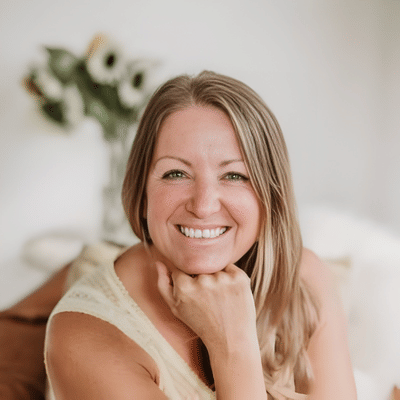
My recent conversation with Soreya James is one of those ones that goes there. It’s not surface-level. It’s not tidy. And at times, it’s pretty confronting in the best way.
Soreya shares parts of her story that most people wouldn’t — near death experience, illness, moments where everything dropped away and what was left was just the body… and something deeper.
And what it brings up is this:
Midlife isn’t one shift. It can be a series of them.
Moments where the identity you’ve been holding just doesn’t fit anymore. Where your body starts asking for something different. Where pushing through stops working.
A lot of people call this a midlife crisis. But what is a midlife crisis, really?
Because when you listen to conversations like this, it starts to feel less like something going wrong… and more like something waking up.
For some, it even starts to touch on the question: what is a spiritual awakening?
Not in a dramatic, out-there way. But in a very real sense of seeing your life more clearly, and not being able to go back to how things were.
One of the things that stood out is how much of this work is about the body.
Not analysing it.
Not talking it to death.
Actually feeling it.
Soreya’s work as a ceremonial speaker isn’t about delivering a polished talk. It’s about responding in real time — using breath, sound, music… reading the room and guiding people back into their bodies.
And you can feel that in the conversation too.
It’s not about having the right words. It’s about what shifts when you drop into sensation instead of staying in your head.
Because at a certain point — especially in midlife — thinking more doesn’t solve it.
Your body has to come with you.
We talked about trauma in a way that I think a lot of women will relate to.
That feeling of going over the same story again and again… understanding it, but not actually feeling different.
Soreya’s take is pretty clear.
Healing isn’t just insight.
It’s capacity.
It’s being able to stay with sensation, to move energy through the body, to let things complete instead of holding them in place.
And she doesn’t just talk about it — she’s lived it.
From a head-on collision to severe illness, she’s had moments where these tools weren’t optional. They were what got her through.
Breath. Sound. Letting the body respond instead of controlling it.
Not in a dramatic way — but in a real, grounded, this-is-what’s-happening kind of way.
There’s also a conversation here about how sensitive many women become in midlife.
Less tolerance for stress.
Less ability to override.
More awareness of what’s actually going on underneath.
And instead of seeing that as a problem, this reframes it as an opening.
An invitation to work differently.
Not harder. Not more controlled.
But more connected.
We also went into areas that not everyone is comfortable talking about openly — including psilocybin and microdosing.
Soreya speaks about it from the perspective of intention and responsibility, not escape.
Used properly, with the right support, she sees it as something that can help people access deeper layers of healing.
But there’s no pushing here. No convincing.
Just a really honest conversation about what’s possible — and what needs to be in place for it to be supportive rather than destabilising.
What stayed with me most is this idea of a “core wound” — something many of us carry, often without realising it.
And how midlife has a way of bringing that to the surface.
Not to break us.
But to give us a chance to meet it differently.
This isn’t a conversation that gives you a neat list of steps.
It’s one that opens something up.
It reminds you that transformation isn’t always graceful. Sometimes it’s uncomfortable. Sometimes it asks more of you than you expected.
But it’s also where things become more honest.
And maybe that’s what midlife is really about.